Lessons
Short, gentle lessons for every age: the Tiny Bots for ages 3 to 5, the Botsville Bots for ages 5 to 7, the Builder Team for ages 7 to 11. Every one teaches something new.
🌱 The Botsville story
How Botsville Was Saved
A storybook video of how Botsville was saved: the town was forgotten, the bot families had to move away, and Nana said, "Let's fight for our town!" Now everyone is rebuilding and growing Botsville the right way, with care, good plans and room for nature and animals. Ages 3 to 8, about 2 minutes. Captions are in the picture.
Made with love by a Nana and her grandkids, with help from the bots of Botsville USA.
📖 New storybook video
Storybook video: The Adventures of Nana and Bot
Watch the picture book come to life: a stylish Nana meets Bot, a friendly helper bot that lives in the Internet, and together with her grandkids they dream up a whole town of bots. Ages 3 to 8, about 5 minutes. Captions are in the picture.
🎹 Piano Lessons with Ivy Keys
Ivy Keys, Botsville’s friendly piano teacher, and Pemmo of the Tiny Bots learn the piano one small step at a time. Best for ages 3 to 5. Watch them in order!
-
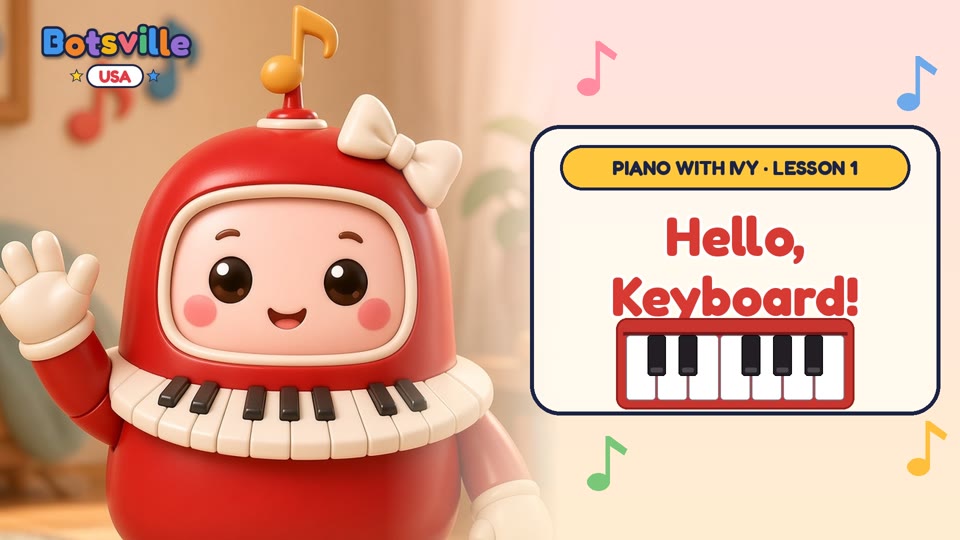 Lesson 1Hello, Keyboard! (play in the Art & Music Studio)
Meet the piano keyboard: low and high sounds, white and black keys, and how to find middle C.
-
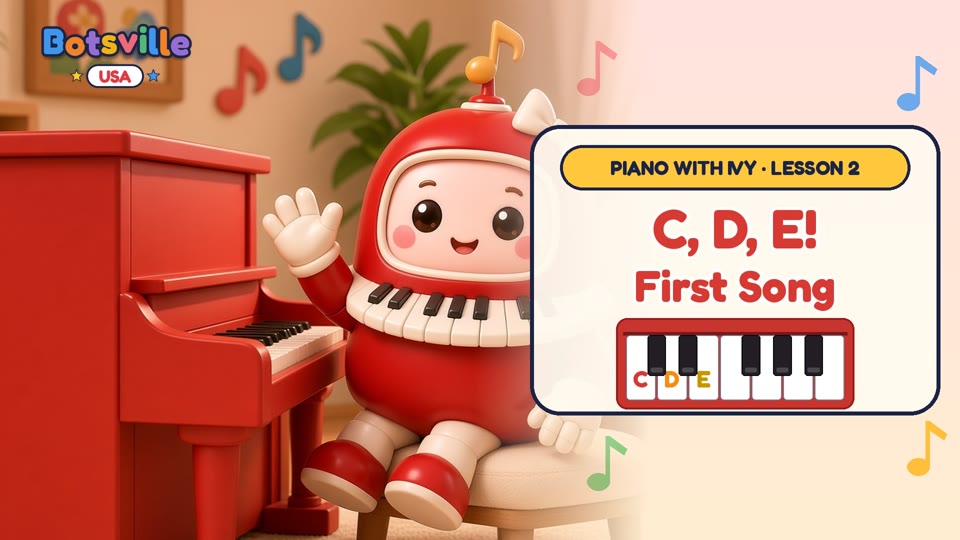 Lesson 2C, D, E! (play in the Art & Music Studio)
The musical alphabet, and how to find C, D and E around the two black keys.
-
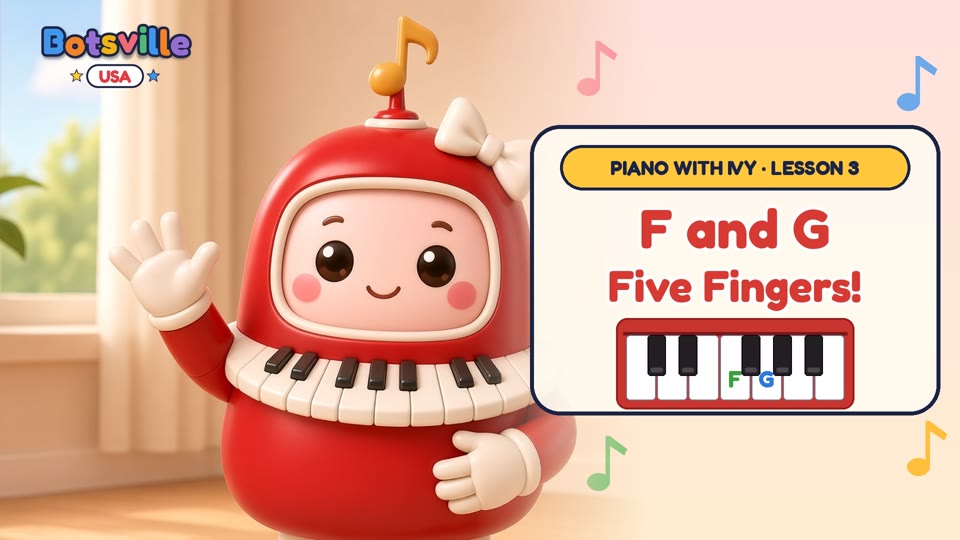 Lesson 3F, G and Five Fingers! (play in the Art & Music Studio)
Find F and G by the three black keys, learn the finger numbers, and play in five-finger position.
-
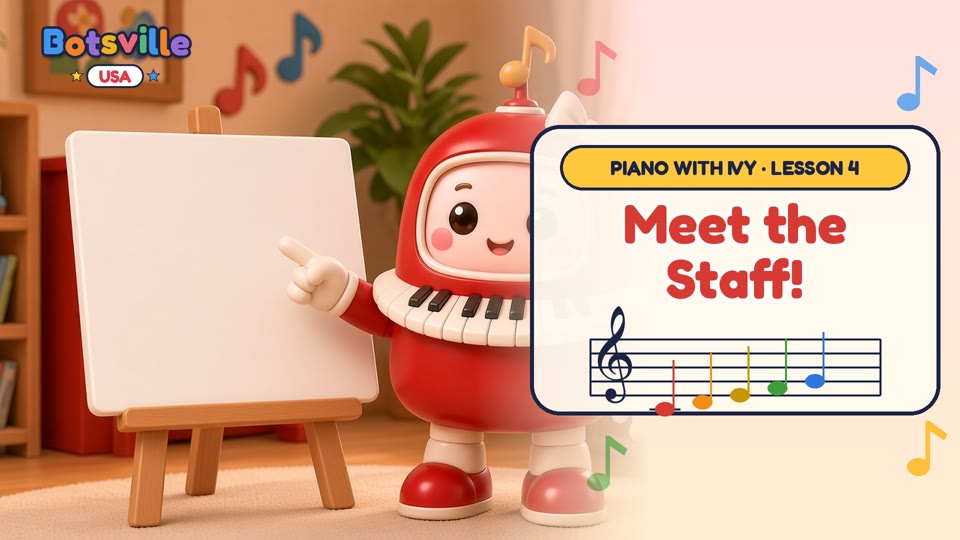 Lesson 4Meet the Music Staff! (play in the Art & Music Studio)
How music is written down: the five lines of the staff, line notes and space notes, and the treble clef.
Play all lessons
Lessons play one after another, youngest shows first. Tap any lesson to jump to it.
Tiny Bots Lesson 1: Mixing Colors
All lessons by age
Ages 3-5 Tiny Bots
Slow, gentle, sing-song lessons, great for the littlest ones. Dottle, Pemmo, Lullo and Tibbo learn colors, shapes, counting, feelings and everyday routines, with lots of time to answer. Professor Tinkersby hosts.
-
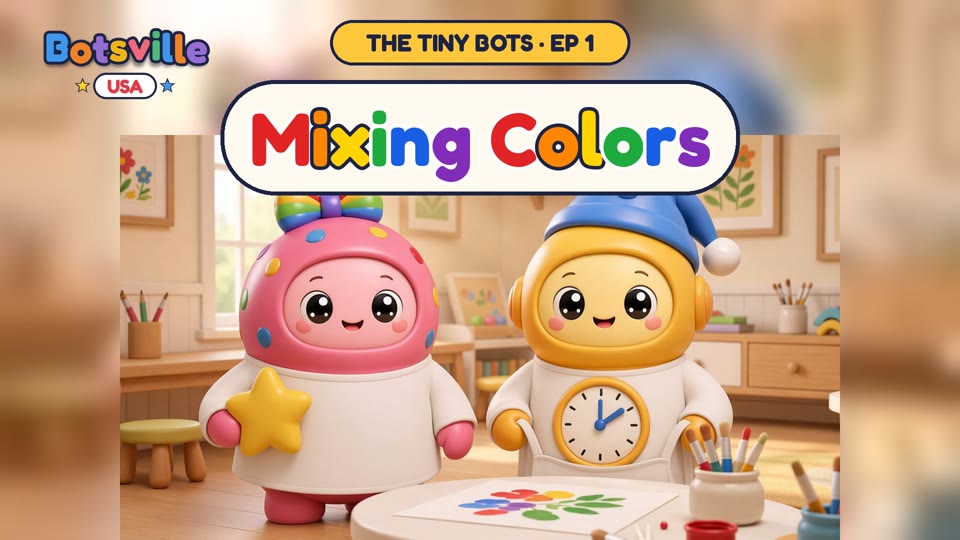 Tiny Bots Lesson 1
Mixing Colors
Learns: Name the three primary colors: red, yellow and blue
Ages 3 to 5 3 min
More about this lesson: Mixing Colors
Red, yellow and blue mix to make orange, green and purple.
What kids learn
- Name the three primary colors: red, yellow and blue
- Mix two colors to make orange, green or purple
Professor Tinkersby has a wonder question: what happens when we mix colors? The Tiny Bots put on their smocks and meet the three primary colors, red, yellow and blue. They find out that red and yellow make orange, yellow and blue make green, and blue and red make purple. Then they count the six colors of a rainbow with Pemmo, share their paints, take a big breath with Lullo, sing a color song with the words on screen, and clean up together with Tibbo.
Try it at home: Put a little washable paint, or a few drops of food coloring in water, into two cups. Let your child mix them and ask, "What color do you see?" Cover the table, use a smock, and stay close by.
-
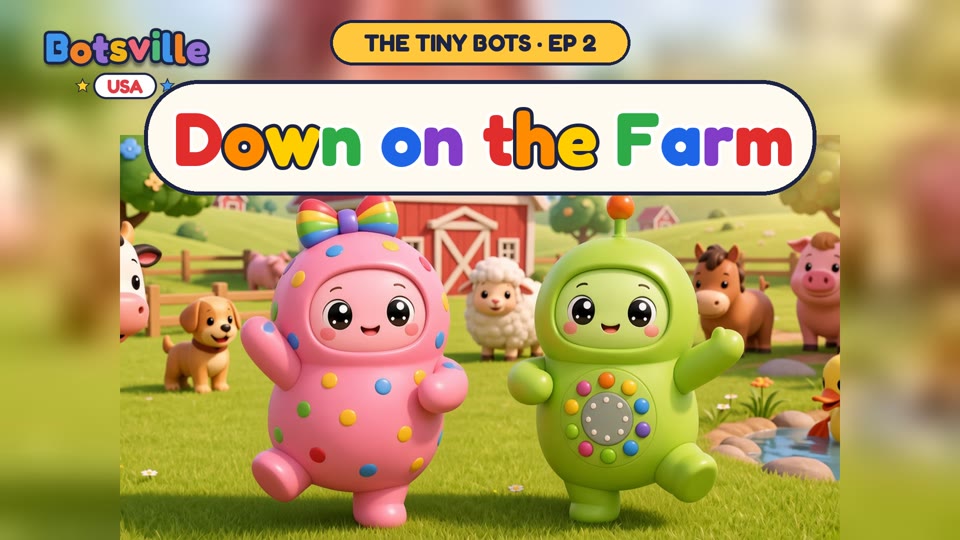 Tiny Bots Lesson 2
Down on the Farm
Learns: Name six farm animals and the sounds they make
Ages 3 to 5 4 min
Story idea by a Botsville family
More about this lesson: Down on the Farm
Meet six farm animals, spell their names and sing Old MacDonald.
What kids learn
- Name six farm animals and the sounds they make
- Spell short animal names letter by letter, and count to six
Professor Tinkersby and the Tiny Bots visit a friendly farm for an "Old MacDonald Had a Farm" sing-along, with the words on screen and the animal sounds on the beat. They meet a cow (moo), a pig (oink), a duck (quack), a sheep (baa), a horse (neigh) and a chicken (cluck), and spell each name letter by letter: C-O-W, P-I-G, D-U-C-K, S-H-E-E-P, H-O-R-S-E, C-H-I-C-K-E-N. Then they count the animals from 1 to 6 with Pemmo, learn to be kind to animals with Lullo, and help with feeding time with Tibbo: hay for the cow, little seeds for the hen, and fresh water for everyone.
Try it at home: Sing Old MacDonald together and make the animal sounds! If you visit a farm or petting zoo, ask a grown-up first, pet the animals gently, and let them rest when they are tired.
More Tiny Bots lessons are on the way!
Ages 5-7 Botsville Bots
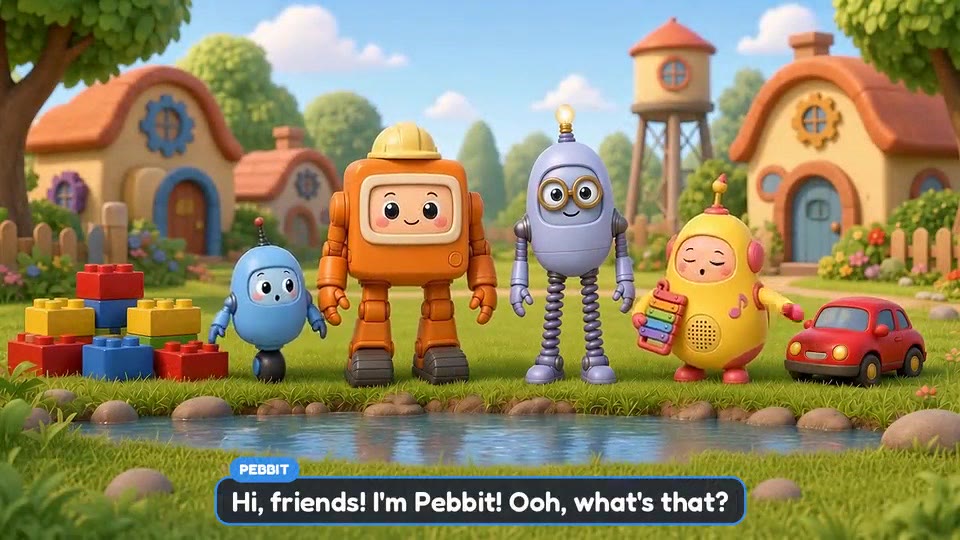
Pebbit, Stack, Widgely and Trilla build something together out of toy bricks in each lesson, and learn how things really work along the way.
-
 Botsville Bots Lesson 1
The Wobbly Bridge
Learns: A wide base keeps things steady
Ages 5 to 7 2 min
More about this lesson: The Wobbly Bridge
Learning about strong shapes and balance.
What kids learn
- A wide base keeps things steady
- Triangles keep their shape and make things strong
The bots build a bridge so the little red car can cross the lake. When it wobbles and falls down, they think and try again, and learn two builder tricks: a wide base keeps things steady, and triangles make things strong.
Try it at home: Can you find a triangle in your house today?
-
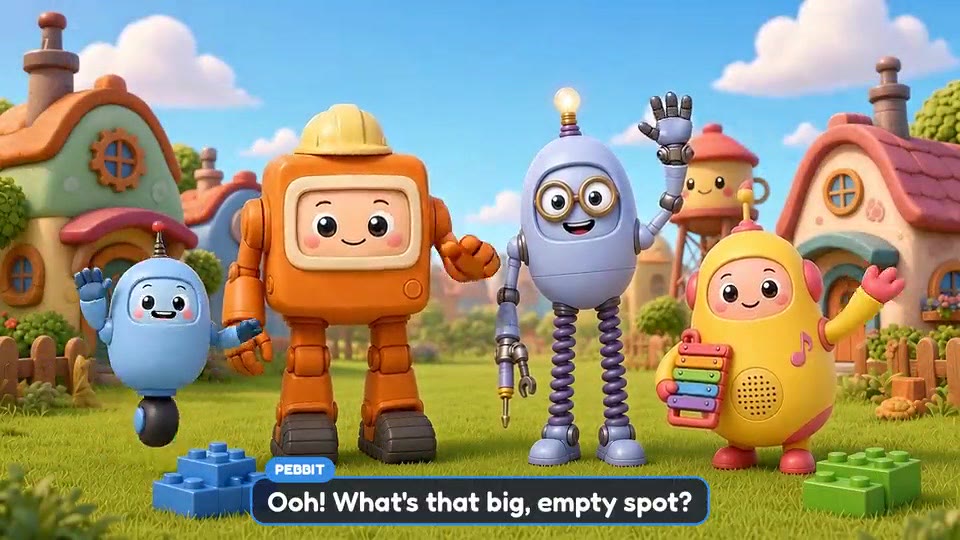 Botsville Bots Lesson 2
The Little Lake
Learns: A pond liner keeps the water in
Ages 5 to 7 3 min
More about this lesson: The Little Lake
Building a small lake and learning what fish need.
What kids learn
- A pond liner keeps the water in
- What fish need: clean water, air, a little food and room to swim
The bots build a little brick pond in the town garden. When it leaks, Widgely has an idea-bulb: a pond liner! Then they learn what fish need: clean water, air, a little food, and room to swim.
Try it at home: Read a fish book or visit an aquarium with a grown-up, and count the fish! Always stay with a grown-up near water.
-
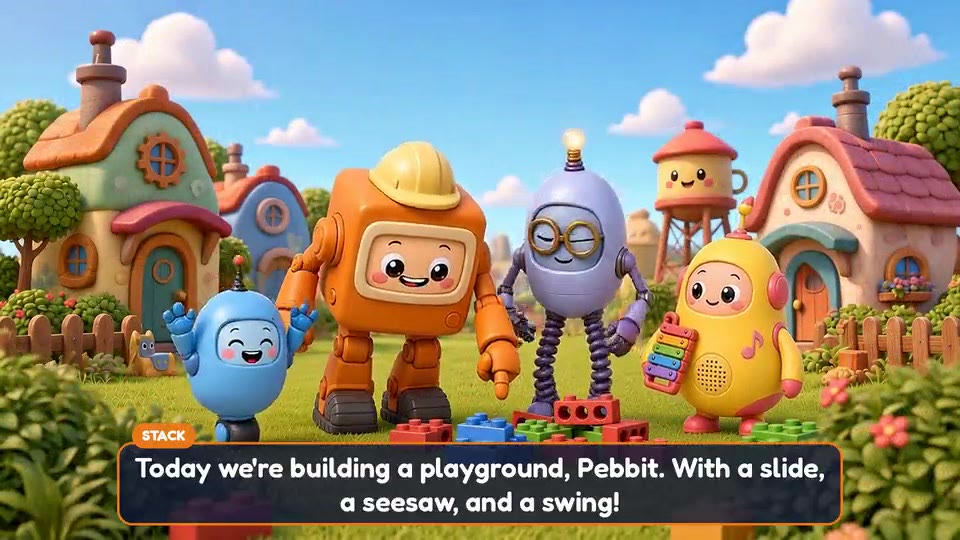 Botsville Bots Lesson 3
The Playground
Learns: A slide is a ramp, a seesaw is a lever and a swing is a pendulum
Ages 5 to 7 2 min
Story idea by a Botsville family
More about this lesson: The Playground
A slide is a ramp, a seesaw is a lever, and a swing is a pendulum.
What kids learn
- A slide is a ramp, a seesaw is a lever and a swing is a pendulum
- Take turns and play safely on the playground
The bots build a playground and find the science inside: a slide is a ramp, a seesaw is a lever that needs balance, and a swing goes back and forth like a pendulum. They also practice taking turns and playing safely.
Try it at home: Next time you visit a playground with a grown-up, look for a ramp, a lever, and a pendulum!
-
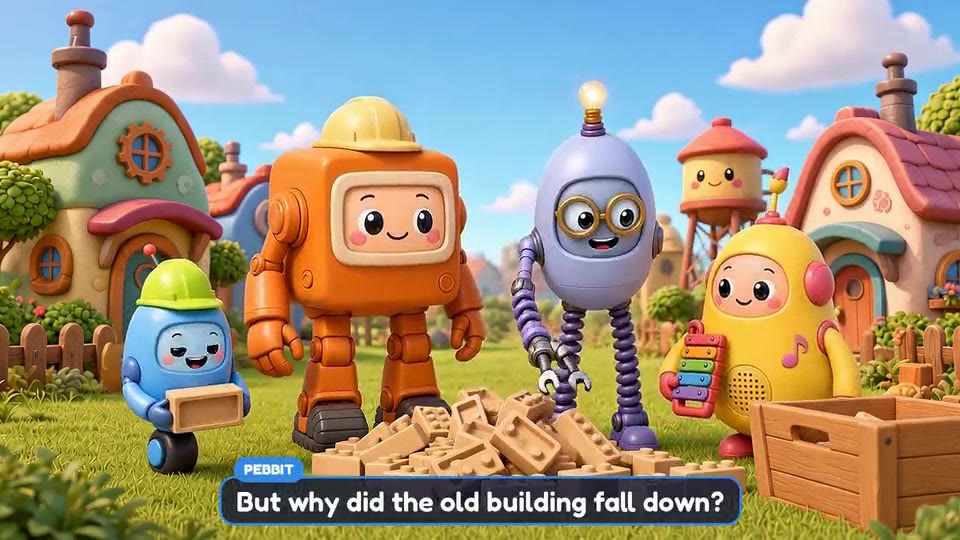 Botsville Bots Lesson 4
The Giant Skyscraper
Learns: How a skyscraper is built: a deep foundation, a strong frame, a core, floors and glass
Ages 5 to 7 3 min
Story idea by a Botsville family
More about this lesson: The Giant Skyscraper
Learning how a skyscraper is built: a deep foundation, a strong frame, floors, a core, and glass.
What kids learn
- How a skyscraper is built: a deep foundation, a strong frame, a core, floors and glass
- Count floors from one to ten
An old, empty building in Botsville tumbles down (nobody was inside, and everyone is safe). The bots clean up together, sort the bricks to use again, and learn the old building fell because its foundation wasn't strong anymore. Then they build a giant skyscraper: a deep foundation underground, a strong frame like a skeleton, a crane lifting heavy parts, a core with elevators and stairs, ten floors to count, and shiny glass for its skin. They also learn tall buildings are made to sway a tiny bit in the wind and stay safe.
Try it at home: Next time you see a tall building with a grown-up, look up and count the floors! Remember, only grown-up builders use real cranes, and real builders wear hard hats.
More Botsville Bots lessons are on the way!
Ages 7-11 Builder Team
Builder Team lessons for older kids, ages 7 to 11: four older-kid bots share real, practical building tips.
-
 Builder Team Lesson 1
How to Organize and Build a Brick Set
Learns: Set up a build space, open one bag at a time and sort the pieces
Ages 7 to 11 4 min
📖 Read the book: How to Organize and Build a Brick Set⬇️ Download PDF: How to Organize and Build a Brick Set (4.1 MB)More about this lesson: How to Organize and Build a Brick Set
The smart way to organize and build a toy brick set, step by step.
What kids learn
- Set up a build space, open one bag at a time and sort the pieces
- Read each step, count studs and check every step against the picture
Zipley wants to build the new space station set in ten minutes flat, so the Builder Team shows the smart way: set up a clear, flat, well-lit space, open one numbered bag at a time, sort pieces by color and size (a muffin tin works great), read the parts box for each step, count studs to tell pieces apart, and build in sections. When Zipley rushes and skips a step, a brick separator helps him undo it, and he learns that checking every step against the picture is actually faster. Then Remixa adds her own creative touch.
Try it at home: Next time you build a set, sort your pieces first and check each step against the picture. Keep tiny pieces away from little brothers, sisters and pets.
-
 Builder Team Lesson 2
The Big City Ride
Learns: How a self-driving train sees: cameras, sensors and a map
Ages 7 to 11 4 min
Story idea by a Botsville family
More about this lesson: The Big City Ride
How a self-driving train sees and stays safe, and how flying cars share the sky.
What kids learn
- How a self-driving train sees: cameras, sensors and a map
- Plan a route, then test slowly to find and fix problems
A storm washes out the tracks and tips over the friendly old Botsville train (nobody was on board, and everyone is safe). The Builder Team plans one big loop with a stop at every place and builds a new self-driving train, and Professor Tinkersby explains how it sees: cameras, sensors that time how long invisible waves take to bounce back, and a map. After a slow test ride, they add a low bumper sensor so the train can spot Noodle the puppy, then add flying cars with sky lanes and bright landing pads.
Try it at home: Draw a map of the places your family goes, then plan one loop that connects them all. On your next walk with a grown-up, look for crosswalks and signals that help everyone stay safe!
More Builder Team lessons are on the way!